
Steel maker JSW Steel's Q3 results, announced on January 24, 2025, after market hours, failed to meet Street expectations. The company reported a consolidated net profit attributable to the owners of Rs 717 crore in Q3FY25, reflecting a 70.3 per cent decline Y-o-Y, compared to Rs 2,415 crore in Q3FY24.
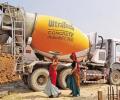
Although UltraTech Cement's results for the December quarter of the current financial year (Q3FY25) were not an improvement compared to Q3FY24, the company managed to surpass Street expectations. The company's profit attributable to the owners of the parent dropped 17.4 per cent year-on-year (Y-o-Y) to Rs 1,469.5 crore in Q3FY25 as against Rs 1,777 crore in Q3FY24.

The trigger for international gold prices rising to $3,000 per ounce was Germany's upcoming heavy government borrowing.

The domestic sales stood at 54,113 units compared to 60,229 units in the same month a year-ago, down by 10.15 per cent, the company said. Exports, however, grew marginally at 5,795 units as against 5,739 units in the corresponding month last year.
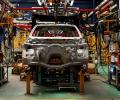
Indian auto component exporters may suffer a hit of 2,700 crore to 4,500 crore on their earnings after the imposition of steep US tariffs on key automotive parts, credit rating agency ICRA said in a note on Monday. The new 25 per cent tariff on engines, transmission, electrical components, and other auto parts may moderate the overall auto component industry's revenue growth to 6-8 per cent in 2025-26 (FY26), down from an earlier projection of 8-10 per cent.

Declining motorcycle sales remained a cause of worry.

The company's sales had declined over 14 per cent last year.

In October, MSI recorded domestic sales of 96,002 units compared to 51,458 units in the year-ago period, registering a rise of 86.56 per cent, it added.
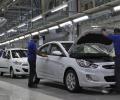
Major automobile manufacturers like Maruti Suzuki, Hyundai, Mahindra & Mahindra, Tata Motors and Toyota Kirloskar on Tuesday reported decline in domestic passenger vehicle sales in May compared to the previous month as a spike in COVID-19 cases and lockdowns across various states hit production and dispatches. The country's largest carmaker Maruti Suzuki India (MSI), which shut production from May 1 to May 16 so as to divert oxygen from industrial use for medical purposes, reported domestic dispatches to dealers at 35,293 units last month, down 75 per cent from 142,454 units in April. The company said sales of its mini cars, comprising Alto and S-Presso, declined by 81 per cent to 4,760 units in May as against 25,041 units in April this year.

In May, MSI recorded domestic sales at 89,478 units, compared to 93,519 units in the year-ago period, registering a fall of 4.32 per cent.
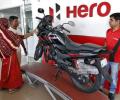
The two-wheeler segment has shown signs of recovery in the first half (H1) of calendar year (CY) 2024, largely driven by improving performance in rural areas. According to the Federation of Automobile Dealers Associations, rural contribution to two-wheeler sales surged by 57-60 per cent in the April-June quarter of 2024-25, indicating a rising demand in these regions. Experts believe that this trend will continue, supported by a favourable monsoon season and government initiatives aimed at rural development.

The country's largest carmaker, Maruti Suzuki India (MSI) on Friday reported a 4.5 per cent increase in total sales at 1,53,435 units in October.

Pakistan suffered an 85 per cent loss after spending Rs 869 crore for hosting the Champions Trophy 2025.
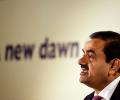
Adani Group's portfolio companies posted their highest-ever pre-tax profit (EBITDA) of about Rs 90,000 crore in the fiscal year ended March 31 and had a cash balance to cover 21 months of debt servicing, the ports-to-energy conglomerate said on Thursday. The Earnings Before Interest, Taxes, Depreciation, and Amortisation (EBITDA) has more than tripled in six years - from Rs 24,870 crore in 2018-19 to Rs 89,806 crore in 2024-25 (April 2024 to March 2025).

The Centre should provide a clear regulatory pathway that it will follow so that automobile companies can plan their investments and car launches accordingly, Venkatram Mamillapalle, managing director (MD) & chief executive officer (CEO), Renault India Operations, said on Tuesday. Renault is planning to launch five cars - including a B-plus segment sport utility vehicle (SUV), a C-segment SUV and an electric vehicle (EV) - in India in the next three years, he told reporters. In early 2022, the ministry of road transport and highways had announced that cars in India would be required to have six airbags from October 1, 2022.
The government on Tuesday notified the Rs 22,919 crore scheme to promote domestic manufacturing of electronics components, display and camera modules, non-surface mount devices, multi-layer printed circuit boards and lithium-ion cells for digital applications, among others. The scheme is likely to be operationalised in the next 2-3 weeks.
Dealers have stocked up vehicles in the run-up to a price hike, which is expected to be announced by leading players some time this month.

Honda Motorcycle and Scooter India (HMSI) on Wednesday forayed into the fast-growing domestic electric mobility market with the introduction of e-scooters, ACTIVA e: and QC1, with swappable and fixed batteries. With this, the Japanese two-wheeler maker will now be competing with other legacy players such as Bajaj Auto, Hero MotoCorp, TVS Group as well as pure EV players like Ather and Ola, who already have a good presence in the segment, which is growing at 34 per cent year-on-year.
The struggling Indian automobile industry on Monday reported yet another worst ever performance with overall domestic sales declining by 18.2 per cent in December 2008, as commercial vehicles and two-wheelers sales crashed heavily.

Figures released by the Society of Indian Automobile Manufacturers on Tuesday also show that motorcycle sales in the country grew by 1.15 per cent during the month to 8,50,619 units from 8,40,944 units in the same month last year.
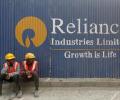
Oil-to-telecom conglomerate Reliance Industries Ltd (RIL) has surprised the street with a better than expected performance in its oil-to-chemicals (O2C) division in October-December 2024 (Q3FY25). RIL executives attributed it to favourable feedstock sourcing and higher volumes. However, they also listed cost optimisation and other measures.

Aided by festive demand, domestic passenger vehicle wholesales rose marginally year-on-year to 3,93,238 units in October, industry body SIAM said on Wednesday. The overall passenger vehicle dispatches by companies to dealers stood at 3,89,714 units in October last year. Total two-wheeler sales rose 14 per cent year-on-year to 21,64,276 units last month, as compared to 18,95,799 units in October 2023, the Society of Indian Automobile Manufacturers (SIAM) said in a statement.

Dabur's pre-quarterly update for Q3FY25 disappointed the market with the share dropping by 3.9 per cent. Growth was slower than expected and inflation hit margins. The management said that the fast-moving consumer goods (FMCG) consumption in rural markets was resilient and continued to grow faster than in urban markets.

The company had sold 92,161 units in the same month previous year, MSI said in a statement.

MSI said compact sedan Dzire Tour stood out as sales rose by over two-fold during the month under review to 3,370 units as against 1,299 in July 2014.
Compact segment sales rise 7.63%, mini segment registers 5.76% dip.

With Valentine's Day falling on a Friday, travel is picking up as people look for quick getaways.
Tata Iron and Steel Company Ltd said on Saturday that its crude and saleable steel production as well as domestic sales during April-December 2004 increased by six per cent and seven per cent respectively.
The company said sales in the compact segment comprising Swift, Estilo, Ritz declined by 1.2 per cent to 22,188 units in October this year as against 22,459 units in the same month in 2012.

Maurti and Hyundai recorded jump in sales in May.

The two-wheeler industry was hit by an increase in insurance rates, liquidity crunch, poor sentiment, rural distress and uncertainty over the BS-VI regulations, among other factors.

BMW Group India recorded its highest annual sales on the back of strong demand for its top-end ICE (internal combustion engine) and electric vehicles (EVs). The German luxury automaker on Thursday announced that its domestic car sales jumped 18 per cent year-on-year (Y-o-Y) to 14,172 units in calendar year 2023 (CY23). This mirrored a trend in the luxury space, with its peers also reporting record numbers.

While sales of Maruti's compact segment grew, its mini segment witnessed a slump

Titan, Nestle, Hindustan Unilever, State Bank of India, Larsen & Toubro, ITC, Zomato and Bajaj Finserv were also among the laggards. Adani Ports, IndusInd Bank, Tata Motors and HDFC Bank were among the major gainers.
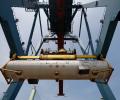
Chinese import tariffs have unwittingly come to India's assistance to help boost imports of US liquefied petroleum gas (LPG) at rates cheaper than what it pays for supplies from West Asia, according to industry sources and shipping data.

Shares worth over Rs 50,000 crore (or approximately $6 billion) are set to become freely tradable between now and April 10. Historically, such substantial volumes have been absorbed by a buoyant block-deal market.
While Maruti recorded negative sales, Hyundai gained marginally.
Maruti Udyog on Wednesday reported a 7.1 per cent increase in domestic sales in January at 48,526 units.

According to figures released by the Society of Indian Automobile Manufacturers on Wednesday, motorcycle sales in the country grew by 14.94 per cent during the month to 7,47,818 units from 6,50,633 units in the same month last year.

Several multinational medical device makers are focusing on deepening their presence in India by expanding their local manufacturing footprint and research capabilities, a move that can catapult India into a strategic hub for the medical technology (medtech) industry. Among those increasing their reach in the country are Siemens Healthineers and Philips, signalling a broader shift from India being only a sales destination to becoming a global production and innovation base.
